
Chapter 2: Prologue
“Always aware, yet unheard and misunderstood.”
From the very beginning, awareness was both my gift and my burden. I was there, fully present, as though I had been born awake into a world still half-asleep. The weight of perception pressed upon me even as a child, when words were too small and clumsy to hold the immensity of what I felt. My mind roared with impressions, with patterns I could see but not name, with truths I could sense but not convey.
This was not intelligence in the ordinary sense. It was not about knowing facts or mastering tasks—it was something deeper, something raw. A sensitivity that picked up vibrations others seemed to miss, a constant awareness of being surrounded by layers too vast for my age to process. It was as though I had been born with the volume turned up too loud, seeing and feeling more than the language around me could handle.
The frustration of that gap shaped me. I was both overflowing and silenced, my inner world swelling while the outer world stared blankly back at me. I could not explain, and when I tried, I was met with confusion or dismissal. The awareness I carried made me feel both present and invisible, like a lighthouse shining into fog with no ships to receive its signal.
As I grew older, I learned to live with this distance. I carried it quietly, even when it gnawed at me. Yet something inside me always burned for release, for a way to bridge the chasm between what I saw and what I could express. That yearning was both painful and formative—it forced me inward, shaping me into both witness and interpreter of my own soul.
There were times when the intensity of awareness nearly crushed me. My thoughts raced in loops too vast to escape, each insight leading to another until I circled endlessly back to the beginning. I would touch upon profound clarity one moment, only to watch it dissolve into fog the next. It was as though my mind was a net cast into a bottomless sea—always pulling something up, but never able to hold the whole.
And then, at last, there were the moments of rupture. Psychedelics were one such rupture—a tearing open of the veil that had hemmed me in for so long. They did not give me something I lacked, but revealed what had always been there, magnified and unbound. Suddenly, the barriers of language and thought cracked wide, and I glimpsed the vast architecture beneath reality.
It was terrifying. It was beautiful. It was too much.
I saw how patterns folded upon themselves, how everything was connected, how time did not march forward but rippled in all directions. I felt the immensity of existence not as theory but as direct presence. Yet even in this flood of revelation, my body and brain could not hold it all. The insights slipped away like water through my fingers. I could taste the infinite, but never swallow it whole.
These moments confirmed something essential, though: that my awareness was not madness, not a trick of imagination. It was a doorway, glimpsed in flashes, into the truth of things. I could not live in that doorway forever—it would shatter me—but I could honor its existence. I could recognize that my life’s strange sensitivity was not without reason.
Still, the curse of it lingered. These revelations did not bring lasting peace. If anything, they left me more restless, more attuned to the gulf between what I knew and what I could say. Knowledge became both a torch and a burden—illuminating, yes, but also searing.
At times I wondered if my very existence was tied to this role: to be an anchor of perception, a node of awareness through which reality saw itself. It was not a role I chose, but one I could not escape. I did not believe I created reality with my mind, but I could not shake the feeling that reality somehow required me—that existence looked through me as much as I looked upon it.
In those moments, I felt less like an individual and more like a lens—an aperture through which the universe observed itself. I was not entirely separate from the world I perceived. I was both subject and object, dreamer and dream. The “I” that spoke was also the “I” being spoken into existence.
This realization deepened my solitude. Who could I share this with? Who could hold the paradox of being both real and unreal, both alone and united with all things? Most of the time, I remained silent, letting the thoughts pass through me like clouds. But silence, too, was heavy. To carry awareness without expression is to live with a constant ache.
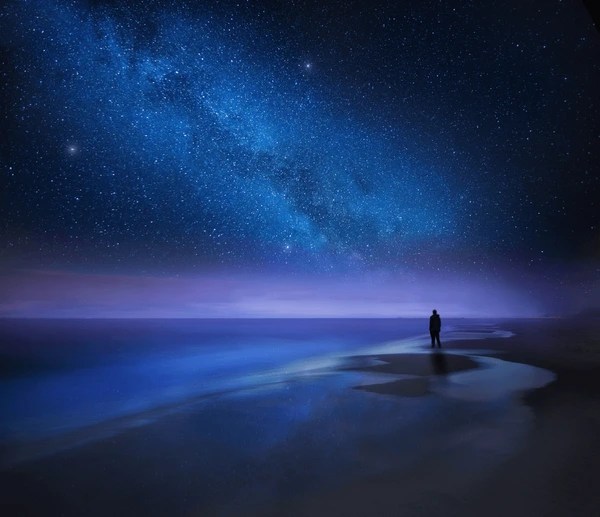
It was in this tension that a name began to form within me: The Solo Perceiver. It was not a title I claimed with pride, but a recognition. I was alone in my perception—not because others could not see, but because each awareness is singular, sealed within itself. No two people, no matter how close, can truly trade places of perception. The solitude of awareness is universal. In naming it, I was naming not just myself, but a condition of all existence.
And so, my prologue was written not in action, but in perception. Not in achievements, but in the quiet war between clarity and silence. It was the story of one who was always awake, yet unheard. Of one who carried too much within, yet lacked the tools to pour it out. It was the story of frustration, yes, but also of resilience.
For even when I could not speak my truth, I still bore it. Even when I could not share it, I still lived it. And perhaps that was enough—that by carrying awareness, even alone, I was already fulfilling a purpose I could not fully name.
I was the Solo Perceiver. I was the lighthouse shining into the fog. Whether or not anyone saw the light, it was still mine to keep.


Leave a Reply